Welcome, fellow coffee enthusiasts! As someone who has spent over 15 years immersed in the world of espresso machines, from the intricate mechanics to the delicate art of flavor extraction, I can tell you that few things bring as much joy as a perfectly pulled shot. And at the heart of this pursuit for many lies the incredible Semi Automatic Espresso Machine. This isn’t just a piece of kitchen equipment; it’s your gateway to becoming a home barista, offering the perfect blend of control and convenience to craft café-quality beverages right in your own kitchen. Whether you’re upgrading from a basic brewer or taking your first plunge into serious espresso, mastering a semi-automatic machine is a rewarding journey.
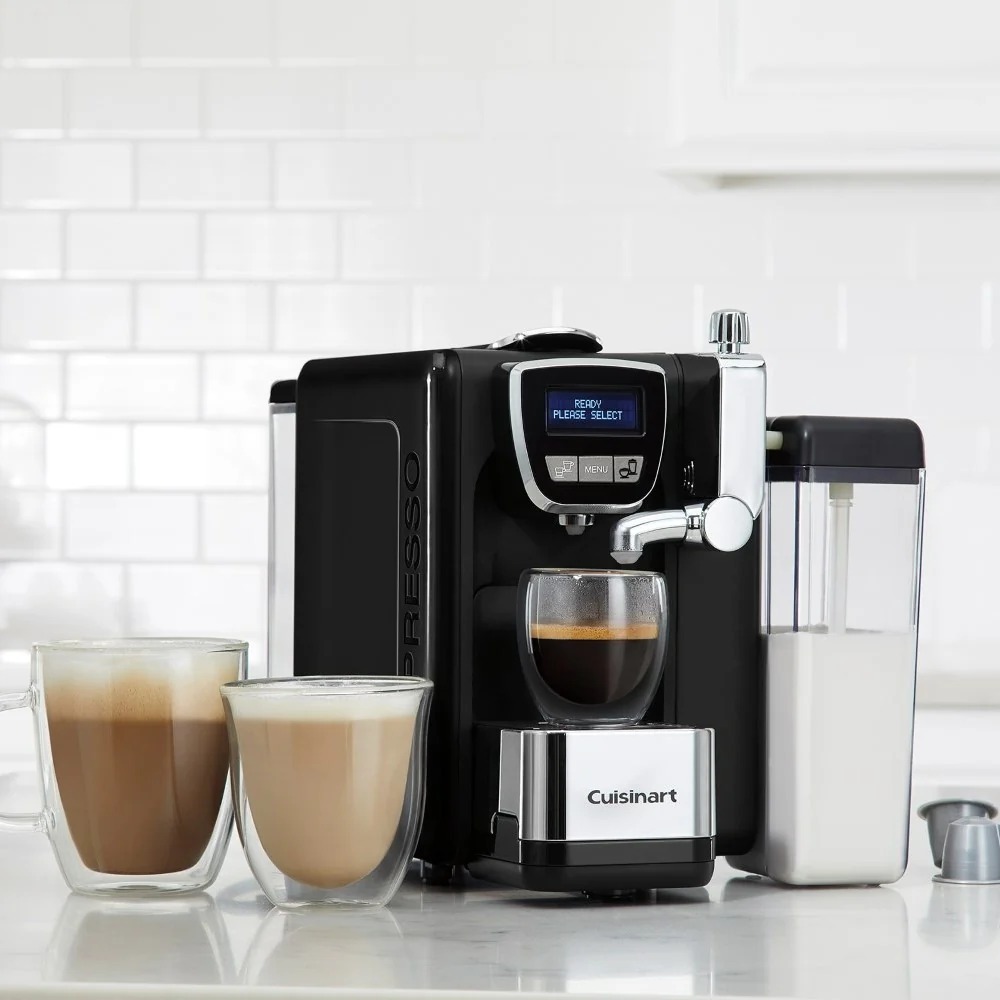
What Exactly is a Semi Automatic Espresso Machine?
So, what makes a semi-automatic stand out in the crowded landscape of espresso makers? Essentially, a semi automatic espresso machine gives you control over the key variables of brewing – like grind size, dose, and tamp – but automates the pump pressure, ensuring a consistent nine bars of pressure for extraction. You start and stop the water flow, giving you the power to dictate the length of your shot. It’s a sweet spot, really, offering more hands-on involvement than a fully automatic machine, but less manual effort than a true lever-operated one.
A Brief History and Evolution
The lineage of the modern espresso machine is rich, dating back to early 20th-century Italy. While the first machines were entirely manual, requiring baristas to physically pull levers to generate pressure, technological advancements slowly introduced elements of automation. The mid-20th century saw the rise of piston-driven pumps, and eventually, electric pumps, paving the way for the semi-automatic machines we know and love today. These innovations brought consistency and ease to espresso making, democratizing the craft and moving it from specialized cafes into homes.
How They Differ from Manual and Fully Automatic Machines
Let’s quickly break down the family tree. A manual espresso machine (or lever machine) demands the most from you, the barista. You control everything: the pressure, the pre-infusion, the flow. It’s a beautiful, tactile experience, but steep learning curve. On the other end, a fully automatic espresso machine (often called a “bean-to-cup” machine) takes care of almost everything – grinding, tamping, brewing, and even steaming milk – often at the touch of a button. Great for convenience, but less control over the final product.
The semi automatic espresso machine sits squarely in the middle. It handles the consistent pressure for extraction but leaves the crucial elements of grind, dose, and shot time to you. This balance is precisely why many serious coffee lovers gravitate towards them. It’s where the magic of personal touch meets the reliability of modern engineering.
Diving Deep: The Anatomy of Your Semi Automatic Espresso Machine
Understanding the core components of your semi automatic espresso machine isn’t just for tech geeks; it empowers you to make better espresso and maintain your investment.
Key Components Explained
- Boiler: This is where the water is heated. Machines can have single boilers (for both brewing and steaming, requiring temperature surfing), heat exchangers (one boiler, two temperature circuits), or dual boilers (separate boilers for brewing and steaming, offering superior temperature stability). Prosumer models like the Profitec Go or Lelit Bianca often feature dual boilers for optimal performance.
- Pump: The heart of the machine, responsible for generating the 9 bars of pressure needed to extract espresso. Most home machines use a vibratory pump, while higher-end models might feature a quieter and more robust rotary pump.
- Group Head: The head where the portafilter locks in, and hot water is delivered to the coffee grounds. E61 group heads, common on many prosumer semi-automatics, are renowned for their thermal stability and pre-infusion capabilities.
- Portafilter: This detachable handle holds the filter basket, which contains your ground coffee. It locks into the group head.
- Steam Wand: Your tool for transforming cold milk into silky microfoam for lattes and cappuccinos. Many semi-automatics feature powerful manual steam wands, allowing for true latte art creation.
The Role of Pressure and Temperature
Pressure and temperature are the twin pillars of espresso extraction. The ideal pressure for espresso is consistently around 9 bars, which is why semi-automatic machines automate this. Temperature, however, is where things get nuanced. Different roast levels and coffee origins often perform best at slightly different temperatures. A machine with a PID (Proportional-Integral-Derivative) controller allows you to precisely adjust and maintain your brew temperature, offering a significant advantage for flavor exploration. “Consistency is always going to be key, and that’s why accurate temperature and grind results are so vital for the perfect cup,” notes Zach, a seasoned coffee industry expert.
Getting Started: Your First Steps with a Semi Automatic Espresso Machine
Excited to pull your first shot? Let’s walk through the process. Remember, practice makes perfect, and every shot is a learning opportunity.
Grinding Your Beans: The Foundation of Flavor
This is non-negotiable: use fresh, high-quality coffee beans, and grind them just before brewing. The grind size is critical for a good semi automatic espresso machine shot. It should be fine, like powdered sugar, but not so fine that it chokes the machine. Too coarse, and your shot will run too fast and taste weak; too fine, and it will trickle out or not brew at all, tasting bitter and over-extracted. A good burr grinder is as important as the machine itself – aim for at least a 60/40 budget split between your machine and grinder.
Dosing and Tamping: Crafting the Perfect Puck
- Dosing: Measure your coffee precisely. For a double shot, typically 18-20 grams of coffee is a good starting point, depending on your basket size. Distribute the grounds evenly in the portafilter basket.
- Tamping: This step compresses the coffee grounds into a “puck.” The goal is even compaction to ensure water flows uniformly through the coffee, extracting flavor evenly. Apply firm, even pressure. Some machines, like the Breville Barista Express Impress, even offer assisted tamping for consistency.
The Art of Extraction: Pulling the Perfect Shot
With your portafilter locked in, place your pre-warmed cup beneath the spouts. Activate the pump. The goal for a classic double espresso is usually around 25-30 seconds of extraction time, yielding about 1.5 to 2 ounces of liquid. Observe the stream: it should start dark, then become a steady, honey-like flow, producing a rich, reddish-brown crema on top. If it flows too fast or too slow, adjust your grind size for the next shot.
Steaming Milk: Creating Silky Microfoam
Steaming milk for lattes and cappuccinos is an art form itself.
- Prep: Fill a cold stainless steel pitcher about one-third full with cold milk.
- Purge: Briefly open the steam wand valve to clear any condensation.
- Steam: Submerge the tip of the wand just below the milk’s surface. Open the valve fully. You’ll hear a “kissing” sound as air is introduced, creating foam.
- Texture: Once you have enough foam, submerge the wand deeper to heat the milk, swirling it to create a vortex. This integrates the air, creating a silky “microfoam.”
- Finish: Close the valve when the pitcher is too hot to touch comfortably (around 140-155°F or 60-68°C). Immediately wipe the wand clean and purge it again to prevent milk from drying inside.
Mastering the Craft: Tips for the Perfect Espresso Shot
Even with a fantastic semi automatic espresso machine, a few insider tricks can elevate your espresso from good to outstanding.
Dialing In Your Grind
This is perhaps the most crucial skill. Your perfect grind setting isn’t static; it can change with different beans, humidity, and even how fresh the beans are. Start with a recommended setting, then adjust incrementally. Too quick a shot? Grind finer. Too slow or no flow? Grind coarser. It’s an ongoing conversation between you and your beans.
Temperature Surfing (if applicable to some models)
For single-boiler semi-automatics, “temperature surfing” involves manipulating the boiler temperature to hit the ideal brewing temperature. This usually means running some water through the group head to cool it slightly after steaming, or waiting for a specific temperature light to indicate readiness. Dual boiler machines largely eliminate this need, offering more consistent results.
Understanding Flow Rate and Crema
A good espresso shot usually exhibits a consistent flow and a beautiful, tiger-striped crema. Crema is an emulsion of coffee oils, sugars, and CO2, and it’s an indicator of freshness and proper extraction. A thin, pale crema might suggest underextraction, while a very dark, bubbly crema could indicate over-extraction. Pay attention to it; it’s your visual feedback.
Keeping Your Machine Pristine: Maintenance and Cleaning for Longevity
A well-maintained semi automatic espresso machine will serve you for years. Neglect it, and your espresso quality will suffer, and your machine’s lifespan will shorten.
Daily Rinse and Wipe
After every shot, remove the portafilter, discard the puck, and rinse the portafilter and basket. Wipe down the group head with a damp cloth to remove any residual grounds. After steaming milk, always wipe the steam wand immediately and give it a quick purge to prevent milk from drying and clogging it.
Backflushing and Descaling
- Backflushing: This involves cleaning the group head by running pressurized water through a “blind” (no-hole) filter basket with a cleaning detergent. It removes built-up coffee oils and grounds. Do this weekly or bi-weekly depending on usage.
- Descaling: Mineral deposits from water can build up in your machine’s boiler and pipes, affecting performance and taste. Descale every 1-3 months, using a dedicated descaling solution, following your machine’s instructions. Using filtered water can significantly reduce the frequency needed for descaling.
Common Troubleshooting Tips
- No Flow/Slow Flow: Check grind size (too fine?), tamp (too hard?), or if the machine needs descaling.
- Fast Flow/Weak Shot: Grind coarser, use more coffee, or tamp harder.
- No Steam: Check if the steam boiler is heated, or if the wand is clogged (purging regularly helps!).
- Leaking: Could be a worn group head gasket or a loose connection. Refer to your manual or a service professional.
Choosing Your Ideal Semi Automatic Espresso Machine: A Buyer’s Guide
With so many fantastic options available, choosing the right semi automatic espresso machine can feel overwhelming. Let’s break down what to look for.
Factors to Consider
- Budget: Entry-level semi-automatics can start around a few hundred dollars, while prosumer models can run into the thousands. Decide what you’re comfortable investing, remembering the grinder is a separate, vital purchase.
- Features: Do you want a built-in grinder (like the Breville Barista Express Impress)? A PID for temperature control? A dual boiler for simultaneous brewing and steaming? Flow control for advanced profiling?
- Size: Consider your counter space. Some machines are quite compact, while others require a dedicated coffee bar.
- Build Quality: Stainless steel construction, commercial-grade components, and reputable brands often signify longevity and better performance.
Top Brands and Models Worth Exploring
- Breville: Known for user-friendly features, often with integrated grinders, like the Barista Express line. Great for beginners to intermediates.
- Gaggia: The Gaggia Classic Pro is a legendary entry-level workhorse, beloved for its moddability and solid performance.
- Rancilio: The Rancilio Silvia has long been a benchmark for single-boiler home espresso, with the Silvia Pro X offering dual boiler capabilities for enthusiasts.
- Profitec / ECM / Rocket Espresso: These brands represent the higher end of prosumer machines, featuring robust build quality, E61 group heads, PID controllers, and often dual boilers, offering exceptional control and café-like results. Models like the Profitec Go or ECM Synchronika are excellent choices for the dedicated home barista.
- Lelit: Brands like Lelit, with models like the Lelit Bianca, offer advanced features like flow profiling, appealing to those who want to dive deep into extraction variables.
FAQs About Semi Automatic Espresso Machines
Q1: Is a semi automatic espresso machine hard to use?
Not at all! While there’s a learning curve to truly master the art, semi automatic espresso machines are designed to be intuitive. They guide you through the process, but give you enough control to develop your skills over time. It’s about practice and understanding the basics.
Q2: What’s the difference between a semi-automatic and a fully automatic machine?
A semi automatic espresso machine gives you control over grinding, dosing, tamping, and shot duration, while automating the pump pressure. A fully automatic (or super-automatic) machine handles almost everything from bean grinding to milk steaming at the push of a button, offering maximum convenience but less control over the final espresso quality.
Q3: How often should I descale my semi automatic espresso machine?
Generally, you should descale your semi automatic espresso machine every 1-3 months, depending on your water hardness and how frequently you use the machine. Using filtered water can extend the time between descaling cycles, but it’s an essential maintenance step to prevent mineral buildup and maintain performance.
Q4: Can I make lattes and cappuccinos with a semi automatic machine?
Absolutely! Most semi automatic espresso machines come equipped with a manual steam wand, allowing you to froth and steam milk to create lattes, cappuccinos, and other milk-based drinks. This is where your barista skills really shine as you learn to create velvety microfoam.
Q5: What kind of coffee beans are best for a semi automatic machine?
Freshly roasted, high-quality whole coffee beans are always best for a semi automatic espresso machine. While espresso blends are popular, you can experiment with single-origin beans too. Look for beans roasted within the last few weeks, and store them in an airtight container away from light and heat. Avoid oily beans if your grinder struggles with them, as they can cause clogging.
Conclusion
Embracing a semi automatic espresso machine is more than just buying an appliance; it’s stepping into a world of flavor, craftsmanship, and personal satisfaction. It’s a journey that lets you connect with your coffee in a profound way, allowing you to understand and influence every step of the extraction process. From selecting the perfect bean to dialing in your grind, tamping with precision, and watching that rich, syrupy espresso flow, every cup becomes a testament to your growing skill. So, go ahead, experiment, refine, and savor the incredible experience of crafting your perfect espresso with your semi automatic espresso machine. The rewards, I promise you, are truly delicious.