For over a decade and a half, I’ve had the distinct pleasure of navigating the intricate world of espresso machines, from robust commercial behemoths to elegant home brewing stations. Yet, few machines capture the heart and soul of espresso quite like the La Pavoni Espresso Machine. It’s more than just an appliance; it’s a testament to timeless Italian design, mechanical ingenuity, and a philosophy that champions the barista’s touch. Owning a La Pavoni isn’t just about making coffee; it’s about embracing a ritual, a hands-on journey to crafting the perfect shot that few other machines can offer.
The Enduring Legacy: A Brief History of La Pavoni
The story of La Pavoni is deeply intertwined with the history of espresso itself. Founded in Milan, Italy, in 1905 by Desiderio Pavoni, the company quickly became a pioneer in the burgeoning world of coffee brewing. While early machines were grand, steam-driven behemoths, it was after World War II that the iconic lever design truly emerged, forever changing how we experience espresso. La Pavoni brought the power of manual extraction into homes and cafes, allowing enthusiasts to directly influence the brewing process. This commitment to craftsmanship and control has cemented the La Pavoni espresso machine as a legend, beloved by those who appreciate both its aesthetic beauty and its exacting demands.
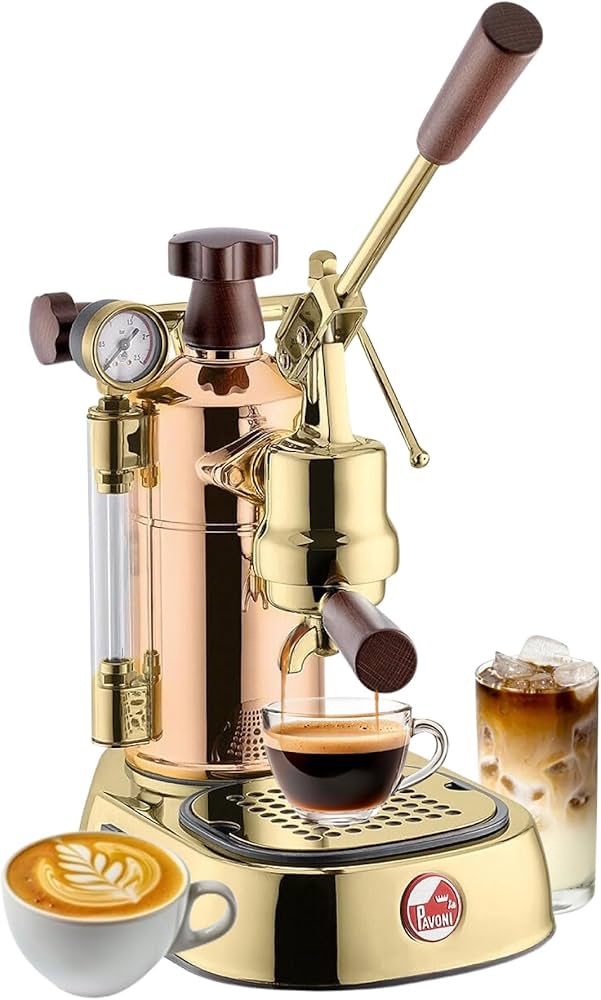
Understanding Your Lever: La Pavoni Models Explained
When you delve into the world of La Pavoni, two models often stand out: the Europiccola and the Professional. While they share the same fundamental, captivating lever mechanism, they cater to slightly different needs and aspirations.
Europiccola: The Compact Classic
The La Pavoni Europiccola is often the entry point for many aspiring lever enthusiasts. It’s a beautifully compact machine, designed to make a statement on any kitchen counter with its gleaming chrome or copper finish. Don’t let its size fool you; it’s capable of producing exceptional espresso.
The Europiccola typically features a 0.8-liter boiler, which heats up relatively quickly, making it ideal for individuals or couples who enjoy a few shots each morning. As master barista Marco Rossi often advises, “The Europiccola is perfect for those who savor the solitude of their morning brew, allowing them to focus entirely on the craft of a few perfect shots.” While its smaller boiler might require more frequent refills if you’re entertaining, the immediacy of its heat-up time is a definite perk for daily use.
Professional: The Enthusiast’s Workhorse
Stepping up to the La Pavoni Professional often means embracing a bit more capacity and a few extra features. The most significant difference lies in its larger boiler, typically around 1.6 liters. This doubles your capacity, allowing you to pull more consecutive shots and steam more milk without needing to refill and reheat, making it a more practical choice for hosting friends or for households with multiple espresso drinkers.
The Professional model also usually includes a boiler pressure gauge, providing visual feedback on the machine’s internal pressure. While the actual brewing pressure is still controlled by your hand on the lever, this gauge offers valuable insight into the machine’s readiness and helps you maintain consistent operation. Its majestic look, often featuring an eagle finial, further elevates its iconic status.
What’s New? Recent Enhancements
La Pavoni continues to refine its classics. Recent models, across both Europiccola and Professional lines, have seen some welcome upgrades. You’ll now find machines equipped with durable brass pistons as standard, a significant improvement over previous plastic versions, enhancing both longevity and thermal stability. Furthermore, all current models feature 52mm group heads and portafilters, standardizing a size that was sometimes a point of confusion in older iterations. Many bases are now constructed from robust stainless steel, offering superior corrosion resistance and ensuring your investment maintains its pristine appearance for years to come.
The Art of Extraction: How a La Pavoni Works
At the heart of every La Pavoni is a deceptively simple yet profoundly effective mechanism. It’s a lever-operated piston system that allows for unparalleled control over the espresso extraction.
The machine begins with a boiler that heats water to brewing temperature, generating steam. This hot water is then introduced into the group head, where your carefully prepared coffee grounds await in the portafilter. The magic happens when you engage the lever. By raising the lever, you draw a precise amount of hot water into the group head, initiating a pre-infusion phase that gently saturates the coffee puck. This allows the grounds to expand and prepare for extraction, leading to a more even and flavorful shot.
As you lower the lever, you manually apply pressure to the water, forcing it through the coffee bed. This is where your skill truly shines. Unlike pump machines that deliver a fixed pressure, a La Pavoni allows you to “feel” the shot, adjusting the pressure profile throughout the extraction. A slower, steadier pull often yields a richer, more nuanced espresso with a beautiful, thick crema. This hands-on control is why enthusiasts consider it the ultimate expression of the home barista’s craft.
Mastering the Ritual: A Step-by-Step Guide to Pulling Your First Shot
Embarking on your La Pavoni journey is an exciting challenge. There’s a learning curve, but the rewards are immeasurable.
Preparation is Key
Before you even think about grinding coffee, proper preparation is paramount:
- Cleanliness First: Always ensure your machine is clean, especially the portafilter and group head.
- Water Quality: Fill the boiler with filtered water to the top of the sight glass. Good water is crucial for good espresso and machine longevity.
- Warm-Up: With the lever in the down position and the steam knob closed, plug in and switch on your La Pavoni. Allow it to heat up for at least 10-15 minutes until the pressure switch light turns off (or the pressure gauge enters the green zone for Professional models). Many experienced users will also perform a “cooling flush” by raising the lever briefly to let some hot water flow through the group head and into a waste cup, ensuring the group is at an optimal temperature, not too hot.
- The Grind: This is perhaps the most critical variable. You need a very fine, consistent grind—think powdered sugar, not table salt. For a La Pavoni, a high-quality burr grinder that allows for micro-adjustments is non-negotiable.
- Dosing & Tamping: For a double shot, typically 14-16 grams of coffee are used in a standard basket. Fill your portafilter, distribute the grounds evenly (a WDT tool can help), and then tamp with firm, even pressure. The goal is a perfectly level, consistent puck. Avoid overfilling the basket; leave about an eighth of an inch of headspace.
The Pull: A Dance of Pressure and Patience
With your machine heated and your portafilter locked in, it’s time for the moment of truth:
- Cup Placement: Place your pre-warmed espresso cup (or cups) under the portafilter.
- Pre-Infusion: Slowly raise the lever all the way up. You’ll hear the water entering the group head. Hold the lever in the up position for a few seconds (typically 5-10 seconds) to allow the coffee to pre-infuse and bloom. You might see a few drops begin to fall.
- The Pull: Gently, but firmly, begin to lower the lever. Aim for a consistent, controlled descent. The resistance you feel will tell you a lot about your grind and tamp. If it’s too easy, your grind is too coarse; too hard, it’s too fine.
- Observe the Flow: Watch the espresso as it extracts. Ideally, it should start as a slow, thick stream, resembling warm honey, gradually thinning but maintaining its rich color and beautiful crema. A typical double shot (around 30-36 grams of liquid espresso) should take about 25-30 seconds from the start of the lever’s descent.
- Stop the Pull: Once you’ve reached your desired volume or the stream starts to lighten too much, you can stop lowering the lever.
“The magic of a La Pavoni lies in the dialogue between you and the machine,” explains renowned barista Anya Sharma. “You’re not just pushing a button; you’re feeling the resistance, watching the flow, and making split-second decisions that elevate each shot. It’s an immersive, meditative experience.”
Steaming Milk: The Perfect Companion
Most La Pavoni machines come equipped with a steam wand, allowing you to craft velvety microfoam for cappuccinos and lattes.
- Purge the Wand: Before steaming, briefly open the steam valve to purge any condensation.
- Position the Wand: Submerge the tip of the steam wand just below the surface of cold milk in your pitcher.
- Introduce Air: Open the steam valve fully. You’ll hear a tearing sound as air is introduced, expanding the milk. Keep the tip at the surface until the milk volume increases by about 25-30%.
- Integrate Air: Submerge the wand deeper into the milk, tilting the pitcher slightly to create a swirling vortex. This integrates the air, creating a smooth, glossy microfoam.
- Temperature: Steam until the pitcher is almost too hot to touch (around 140-150°F or 60-65°C).
- Clean Up: Immediately wipe the steam wand with a damp cloth and purge it again to clear any milk residue.
Keeping Your Legend Alive: Maintenance and Care
A La Pavoni is built to last, but like any finely tuned machine, it thrives on regular care. Proper maintenance ensures consistent performance and extends its lifespan.
Daily Routine
After each use, a few simple steps go a long way:
- Empty Portafilter: Remove the portafilter and knock out the spent coffee puck.
- Rinse & Wipe: Rinse the portafilter and basket thoroughly under hot water. Wipe the group head gasket area with a damp cloth to remove any coffee oils.
- Flush Group Head: With the portafilter removed, lift and lower the lever a few times to flush hot water through the group head. This clears loose grounds and oils.
- Clean Steam Wand: As mentioned, immediately wipe and purge the steam wand after use.
Weekly & Periodic Care
Beyond daily cleaning, some tasks need attention less frequently:
- Descaling: Depending on your water hardness, you’ll need to descale your machine every 1-3 months. Use a commercial descaling solution or a 1:1 ratio of white vinegar and water. Fill the boiler with the solution, heat it, let it sit for 15-20 minutes, then drain through the steam wand and group head. Always follow with several rinses of fresh water.
- Group Head Disassembly & Cleaning: Periodically, you’ll want to disassemble the group head, remove the shower screen, and clean the piston and seals. Coffee oils can build up and affect flavor. A soft brush and some food-safe espresso machine cleaner work wonders.
- Gasket Replacement: Over time, the rubber gaskets (especially the piston seals and group head gasket) will wear out, leading to leaks or inconsistent pressure. Keep a spare gasket set on hand and replace them as needed. This is a fairly straightforward process for the mechanically inclined.
“Treat your La Pavoni like a classic car,” advises veteran espresso technician, David Chen. “Regular tune-ups and gentle care will ensure it performs beautifully for decades, becoming a cherished heirloom rather than just a kitchen appliance.”
Choosing Your Companion: Tips for Buying a La Pavoni
If you’re considering bringing a La Pavoni into your home, here are a few things to keep in mind:
- Assess Your Needs: Are you typically making one or two espressos, or do you frequently serve multiple drinks? The Europiccola excels for personal use, while the Professional handles higher volumes more gracefully.
- Embrace the Journey: A La Pavoni is an investment in time and skill development. If you love the idea of manual control, learning a craft, and the tactile experience of making espresso, it’s an unparalleled choice. If you prefer a “push-button” convenience, a different machine might be a better fit.
- Invest in a Grinder: This cannot be stressed enough. A La Pavoni is incredibly sensitive to grind size. A high-quality burr grinder with fine adjustment capabilities is just as important, if not more so, than the machine itself.
- Budget Accordingly: La Pavoni machines are premium products, reflecting their craftsmanship and legacy. Factor in the cost of a good grinder and potentially some accessories when planning your purchase.
Frequently Asked Questions (FAQ)
Is a La Pavoni espresso machine hard to use?
Yes, a La Pavoni has a significant learning curve compared to automatic or semi-automatic pump machines. It requires skill and practice to master variables like grind size, tamp pressure, and lever force, but this manual control is precisely why many enthusiasts cherish it.
What’s the main difference between the La Pavoni Europiccola and Professional models?
The primary difference is boiler size. The Europiccola typically has a 0.8-liter boiler, while the Professional boasts a larger 1.6-liter boiler. This impacts heat-up time and the number of consecutive shots you can pull or the amount of milk you can steam before needing a refill.
How do I get good crema with my La Pavoni?
Achieving good crema requires a precise combination of factors: a fresh, finely ground coffee, correct dosing and tamping, optimal brew temperature, and consistent pressure application via the lever. Experimentation with grind size is key, as is a steady, controlled lever pull during extraction.
How often should I descale my La Pavoni espresso machine?
The frequency of descaling depends on your water hardness and usage. Generally, every 1 to 3 months is a good guideline. If you notice slower heating, reduced steam pressure, or poor espresso flow, it might be time to descale. Using filtered water can reduce mineral buildup.
Can I make milk-based drinks like lattes and cappuccinos with a La Pavoni?
Absolutely! Every La Pavoni espresso machine comes with a steam wand, allowing you to froth milk for lattes, cappuccinos, and other milk-based beverages. Mastering the steam wand technique is another rewarding aspect of becoming a true La Pavoni barista.
The Journey to Your Perfect Cup
The La Pavoni espresso machine isn’t just a piece of equipment; it’s a partner in your coffee journey. It demands attention, rewards patience, and ultimately empowers you to craft espresso of remarkable depth and flavor, rivaling anything you’d find in a high-end cafe. From its rich history and iconic design to the nuanced mechanics of its lever, every aspect of a La Pavoni invites you to slow down, engage your senses, and truly appreciate the art of espresso. So, embrace the ritual, hone your craft, and discover the unparalleled satisfaction of a perfectly pulled shot from your very own La Pavoni espresso machine.