As a coffee connoisseur with over 15 years immersed in the world of espresso, few names resonate with the same reverence and passion as La Marzocco. More than just a machine, a La Marzocco Espresso Machine represents a philosophy—a relentless pursuit of perfection in every single shot. From bustling cafes to the quiet corners of passionate home baristas, these iconic Italian machines have set the gold standard, blending timeless craftsmanship with cutting-edge hydraulic engineering. If you’re looking to elevate your espresso game and understand what truly makes a La Marzocco stand apart, you’ve come to the right place.
A Legacy Forged in Florence: The Rich History of La Marzocco Espresso Machines
The story of La Marzocco is one steeped in the rich coffee culture of Italy, a tale of innovation born from dedication and a profound respect for the craft.
From Humble Beginnings to Industry Standard
Our journey begins in 1927, amidst the artistic splendor of Florence, Italy, where brothers Giuseppe and Bruno Bambi established Officine Fratelli Bambi. Their initial foray into crafting espresso machines, sparked by a commission for a 2-group, vertical boiler model called the Fiorenza, quickly evolved into a lifelong passion. Inspired by the city’s lion symbol of victory and conquest, they christened their brand La Marzocco.
A pivotal moment arrived in 1939 when Giuseppe Bambi patented the industry’s first espresso machine with a horizontal boiler. This ingenious design wasn’t just a technical marvel; it dramatically improved barista ergonomics and allowed for more brew groups, setting a new standard for efficiency and customer engagement. After a necessary halt during World War II, the post-war era saw the rise of lever machines, bringing the now-familiar rich crema to espresso. By 1961, La Marzocco further refined the extraction process with the introduction of the volumetric pump, stabilizing pressure at a consistent 9 bars, a benchmark still recognized today.
Pioneering Innovation: Dual Boilers and Saturated Groups
La Marzocco’s commitment to pushing boundaries continued in 1970 with the patenting of the GS model. This groundbreaking machine featured the first dual boiler system and saturated brew groups. What did this mean for your espresso? Unprecedented thermal stability. With one boiler dedicated to brewing and another for steam, neither process interfered with the other, ensuring perfectly consistent coffee temperature shot after shot. This technology was so impactful that it was adopted by Starbucks, who utilized La Marzocco machines from the 1990s until 2005. The tradition of innovation didn’t stop there; in 2009, La Marzocco introduced the Strada, featuring revolutionary pressure profiling technology, allowing baristas unparalleled control over extraction.
Bringing Commercial Excellence Home: The Rise of La Marzocco Home
For decades, La Marzocco machines were primarily the domain of commercial establishments. But in 2015, a new chapter began with the launch of the Linea Mini, a machine specifically designed for the discerning home barista, bringing commercial performance and iconic design into the kitchen. Building on this success, the Linea Micra arrived in 2022, engineered exclusively for home use, offering La Marzocco’s renowned quality in an even more compact form factor.
The Heart of the Machine: Unpacking La Marzocco’s Core Technologies
What truly distinguishes a La Marzocco espresso machine, whether it’s a behemoth commercial model or a sleek home unit, are the meticulously engineered components working in harmony.
Dual Boilers: Precision Temperature, Endless Steam
At the core of many La Marzocco machines, including popular home models like the Linea Mini and Linea Micra, is the sophisticated dual boiler system. This means you have two independent boilers: one precisely controlled for brewing espresso, typically around 200°F (93°C), and another dedicated to generating powerful, consistent steam for milk, operating at a higher temperature range of 185-221°F (85-105°C).
“The beauty of dual boilers is the unwavering thermal stability,” explains Eleanor Vance, Master Barista and Espresso Engineer at The Daily Grind. “You can pull shot after shot and steam milk simultaneously without any temperature drops, which is absolutely crucial for consistency in a professional or serious home setting.” This design eliminates the frustrating wait times and temperature compromises often found in single-boiler machines.
Rotary Pump vs. Vibratory: The Silent Workhorse
Unlike many home espresso machines that rely on vibratory pumps, La Marzocco’s home lineup, like the Linea Micra and Mini, often features rotary pumps. Rotary pumps, commonly found in commercial machines, utilize a motor and segmented disc to pressurize water. This results in incredibly consistent pressure delivery, significantly quieter operation, and a much longer lifespan. While vibratory pumps are cheaper and smaller, the tactile experience and unwavering performance of a rotary pump are a hallmark of La Marzocco’s commitment to quality.
Saturated Group Heads and PID Control: Unwavering Consistency
The “saturated group head” is another technical gem. This design ensures the brew group is directly connected to the boiler, allowing water to circulate continuously and maintain a constant temperature. Paired with a Proportional-Integral-Derivative (PID) controller, a sophisticated digital system that precisely manages and predicts temperature fluctuations, you get millisecond-level accuracy in your brew water. This combination guarantees that every espresso shot benefits from unparalleled thermal stability, preserving the delicate flavors and complexity of your coffee.
Pre-Infusion: The Gentle Awakening
Pre-infusion is the gentle art of saturating the coffee grounds with low-pressure water before full extraction begins. In La Marzocco machines like the Linea Mini, dual solenoid valves facilitate this process, applying a soft 3 to 4-bar pressure for several seconds. This controlled pre-wetting allows the coffee puck to evenly absorb water and expand, preventing “channeling”—where water finds an easy path through the puck, leading to uneven and under-extracted espresso. The result is a more balanced, flavorful, and consistent shot. The Linea Mini even allows you to adjust pre-infusion settings via the La Marzocco Home app, giving you even more control.
Choosing Your La Marzocco Companion: Linea Mini vs. Linea Micra
For the home barista, the choice often comes down to two stellar La Marzocco espresso machine models: the Linea Mini and the Linea Micra. Both offer commercial-grade performance, but cater to slightly different needs and spaces.
The Linea Mini: Commercial Soul, Home Presence
The Linea Mini, introduced in 2015, is essentially a scaled-down version of La Marzocco’s legendary Linea Classic commercial machine. It’s built with the same robust, high-quality stainless steel and brass components, embodying industrial aesthetics and exceptional durability. Weighing in at around 71 pounds (32.21 kilograms) and costing approximately $6,000, it’s a significant investment that brings professional brewing capabilities to a home setting.
Key features of the Linea Mini R (the updated version) include a PID-controlled dual boiler system, a saturated group head, a semi-automatic brew paddle with integrated barista lights, and two-stage pre-infusion. It also boasts a new brew-by-weight mode, a digital shot timer, and easy pump pressure adjustments. Its generous 2.5-liter removable water reservoir provides ample capacity, and for those seeking ultimate convenience, a plumb-in kit is available. The Linea Mini R is for the serious home barista who wants uncompromising commercial performance and durability, embodying a true piece of Italian espresso history on their countertop.
The Linea Micra: Compact Powerhouse for the Home
Launched in 2022, the Linea Micra is La Marzocco’s most compact home espresso machine to date, specifically designed to fit smaller kitchen spaces without sacrificing quality. At around 40 pounds and priced at roughly $4,000, it offers a more accessible entry point into the La Marzocco ecosystem.
Despite its smaller footprint (30% smaller than the Mini), the Micra packs a punch, heating up in a remarkably fast 5 minutes from a cold start. It shares core technologies with its larger sibling, including a dual boiler system, PID temperature control, and a commercial-grade rotary pump for quiet, consistent pressure. The Micra also features a unique convertible portafilter, allowing easy switching between single, double, or bottomless configurations. Connectivity via the La Marzocco Home App provides remote control over temperature, energy-saving schedules, and brewing parameters. While its shorter steam wand and lower deck clearance might require a slight adjustment in technique for larger cups, its incredible steaming power and ability to pull café-quality shots consistently are unparalleled for its size. The Micra is ideal for the home barista who prioritizes space and quick readiness, seeking La Marzocco’s renowned quality in an ultra-compact, user-friendly package.
Mastering Your Machine: Techniques for the Perfect La Marzocco Espresso
Owning a La Marzocco espresso machine is just the beginning. Mastering it transforms coffee beans into liquid poetry.
Pre-Brew Preparation: Grind, Dose, Tamp
The foundation of exceptional espresso lies in careful preparation. Always start with freshly roasted coffee beans, ideally within 7-21 days post-roast. Grind your beans to an ultra-fine espresso size just before brewing. Dose your portafilter precisely—typically 7-9 grams for a single shot or 18-20 grams for a double. Use a WDT (Weiss Distribution Technique) tool to break up clumps and ensure even distribution, then tamp carefully and consistently to create a perfectly level coffee puck. “An even tamp is like a strong foundation for a building,” says Eleanor Vance. “Without it, everything else crumbles.”
The Art of Extraction: Brew Paddle and Shot Timer
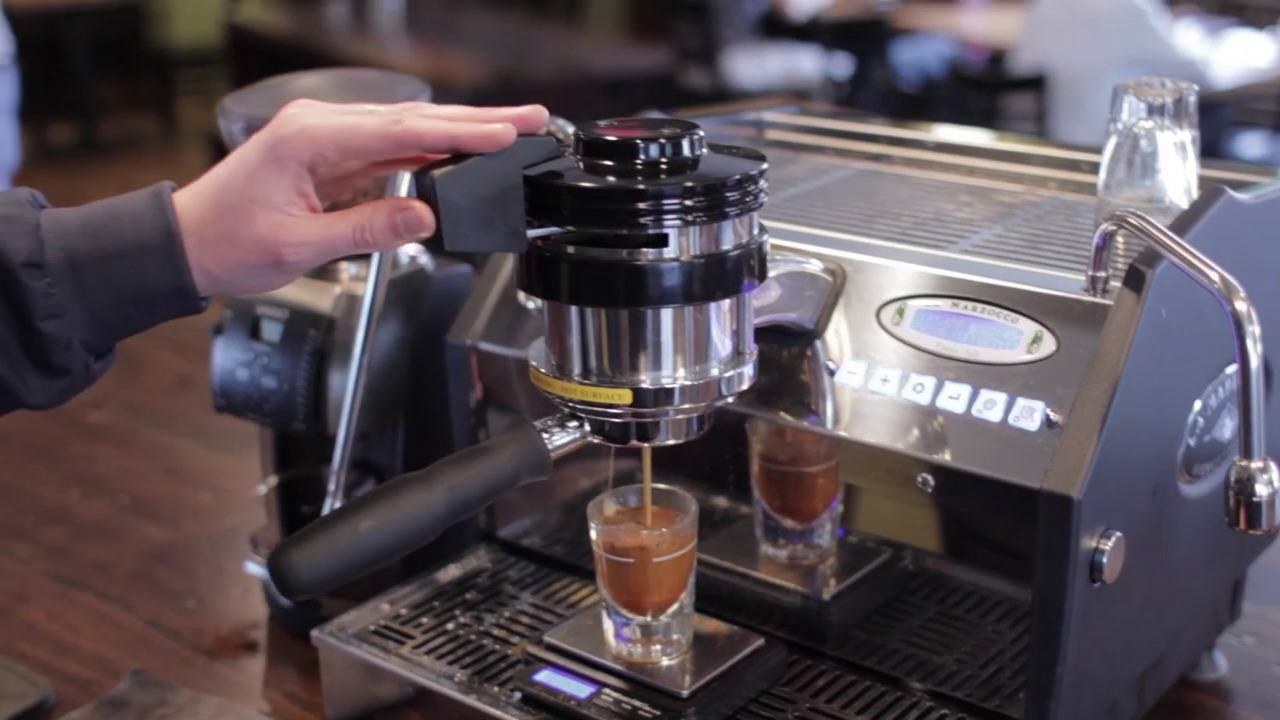
Once your portafilter is locked in, place your shot glass(es) on the cup tray. Engage the pre-infusion if your machine allows—3-5 seconds is a common starting point. Then, slide the brew paddle to the left to begin extraction and activate the digital shot timer. Aim for an extraction time of 25-30 seconds for a double shot (around 2 oz or 60 ml). Some La Marzocco models, like the Linea Mini R, even offer a brew-by-weight mode, stopping extraction automatically when the target weight is reached for ultimate precision. If not, simply slide the paddle back to the right to stop the flow once your desired yield is achieved. Always rinse and dry your portafilter immediately after each shot.
Crafting Microfoam: The Cool-Touch Steam Wand
The powerful, cool-touch steam wands on La Marzocco machines are designed for crafting perfect microfoam. With adjustable steam power settings, you can start on a lower setting to build confidence and gradually increase as your technique improves.
To steam milk, position the wand just below the surface of cold milk in your pitcher. Turn the dial counterclockwise to start frothing, introducing air for a few seconds (the “stretching” phase) to create volume. Then, submerge the wand deeper and angle it to create a vortex (the “texturing” phase), heating the milk to 145-165°F (62-73°C). The cool-touch design allows you to maneuver the wand without burning your fingers, giving you excellent control. Wipe the steam wand immediately with a damp cloth and purge it after each use to prevent milk residue buildup.
The La Marzocco Home App: Your Digital Barista Assistant
Modern La Marzocco home machines like the Linea Mini and Micra integrate with the La Marzocco Home app (available for iOS and Android). This smart connectivity transforms your espresso routine, offering remote control and monitoring.
Once connected via Bluetooth and Wi-Fi, you can:
- Set daily on/off schedules to ensure your machine is always ready when you are.
- Adjust brew boiler and steam boiler temperatures with precision.
- Configure pre-infusion settings to fine-tune your extraction.
- Monitor machine status and track brewing sessions.
- Program auto-backflushing cycles, streamlining your maintenance.
- Preheat your machine remotely, saving you time in the morning.
This app acts as your personal digital barista assistant, empowering you to optimize your La Marzocco espresso machine and elevate your coffee experience.
Preserving Your Investment: La Marzocco Maintenance and Care
A La Marzocco espresso machine is a significant investment, and like any high-performance machine, it demands thoughtful care and regular maintenance to ensure its longevity and continued exceptional performance.
The Golden Rule: Water Quality
This is paramount: do not descale your La Marzocco machine. Instead, prevention is the key. La Marzocco machines are sensitive to water quality, and using the right water is vital to prevent scale buildup, which can severely damage internal components.
“Think of it like this: you wouldn’t put cheap fuel in a sports car,” advises Eleanor Vance. “Your La Marzocco deserves water that meets specific guidelines.” Aim for water with:
- Total Dissolved Solids (TDS): Between 75-150 ppm
- pH Level: Between 6.5-8.0
- Hardness: Between 3-5 grains per gallon (50-85 ppm)
Using filtered water or reverse osmosis water is highly recommended. Many serious home baristas opt for a plumb-in kit with a commercial-grade water softener or filter to ensure perfect water quality.
Daily Rituals for Lasting Performance
A few minutes of daily care will make a world of difference:
- Purge and Wipe Steam Wand: After each use, wipe the steam wand immediately with a damp microfiber cloth and purge it for a few seconds to remove any milk residue.
- Clean Portafilter & Baskets: Empty spent coffee grounds. Rinse the portafilter, baskets, and any spout attachments thoroughly with hot water, then wipe dry.
- Empty Drip Tray: Remove, empty, and rinse the drip tray to prevent blockages and grime buildup.
- Wipe Exterior: Use a clean, damp cloth to wipe down all exterior surfaces, paying special attention to the group head area.
- Backflush with Water: At the end of each brewing session, backflush the group head with water to remove coffee oils and residues.
Weekly and Monthly Deep Cleans
Beyond daily care, a more comprehensive cleaning routine is essential:
- Chemical Backflush (Weekly/Bi-weekly): Using a blind filter basket and a small amount of espresso machine detergent (like Biocaf or Cafiza), perform a chemical backflush. Lock the portafilter into the group head, activate the brew paddle for 10 seconds, then turn it off for 10 seconds to release pressure. Repeat this cycle five times.
- Soak Components: Remove the portafilter basket, shower screen, and its screw. Soak these components in a solution of hot water and espresso machine cleaning powder for about 30 minutes, then rinse thoroughly.
- Steam Boiler Maintenance (Monthly): Heat the machine completely, then turn it off. Place a large bowl under the hot water tap and open the valve to empty the steam boiler. Once empty, ensure the water tank is full and turn the machine back on to refill. This helps reduce mineral buildup.
- Water Tank Cleaning (Monthly): Clean the water tank with warm, soapy water and rinse thoroughly to prevent mold or bacteria growth.
- Inspect Gaskets and Seals: During your monthly routine, take the opportunity to visually inspect the group head gasket and all seals for any signs of wear or cracking.
The Value of Professional Servicing
While meticulous home maintenance is crucial, professional servicing is non-negotiable for a La Marzocco espresso machine. Schedule annual inspections with a certified La Marzocco technician. They will perform diagnostics, update firmware, check pump pressure calibration, and address any potential issues you might have missed, ensuring your machine operates at peak performance for its impressive 10-15 year lifespan. Registering your machine with La Marzocco can also ensure you receive critical after-sales support and resources.
Why Invest in a La Marzocco Espresso Machine?
The question isn’t just about making coffee; it’s about making an experience. Investing in a La Marzocco espresso machine means:
- Unparalleled Quality: Hand-assembled in Florence, Italy, with commercial-grade components, these machines are built to last a lifetime.
- Exceptional Consistency: Thanks to dual boilers, PID control, and saturated group heads, you get unmatched temperature stability and repeatable results.
- Superior Flavor: Precision engineering, rotary pumps, and effective pre-infusion lead to optimal extraction and truly delicious espresso.
- Durability and Longevity: Designed for the rigors of commercial use, La Marzocco machines offer incredible reliability and a long lifespan, making them a wise long-term investment.
- A Piece of Heritage: You’re not just buying a machine; you’re becoming part of a storied tradition of Italian craftsmanship and coffee innovation.
- Community and Support: The La Marzocco community is vibrant, and the brand offers excellent support and resources for its users.
Frequently Asked Questions
Why are La Marzocco machines so expensive?
La Marzocco espresso machines command their price due to their exceptional build quality, commercial-grade components, precision engineering, and extensive hand-assembly in Italy. They are designed for unparalleled performance, thermal stability, and a long lifespan (often 10-15 years with proper maintenance), representing a significant but worthwhile investment for serious coffee enthusiasts.
What’s the main difference between the Linea Mini and Linea Micra?
The primary differences lie in size, weight, and price, reflecting their target user. The Linea Micra is significantly more compact (30% smaller) and lighter (40 lbs vs. 71 lbs) than the Linea Mini, and about $2,000 cheaper. While both offer commercial-level performance with dual boilers and PID, the Micra is designed specifically for home use with a faster heat-up time and a convertible portafilter, whereas the Mini leans towards semi-commercial use or a more traditional home setup.
Can La Marzocco machines be used commercially and at home?
Yes, many La Marzocco models are commercial workhorses, but their Home line (Linea Mini, Linea Micra, GS3) is specifically designed to bring that commercial quality and performance into a home environment. The Linea Mini, for instance, is often found in small cafes or as a backup machine, while the Micra is tailored for exclusive home use.
How often should I clean my La Marzocco espresso machine?
Daily cleaning is essential, including wiping the steam wand, cleaning the portafilter, and emptying the drip tray. A chemical backflush should be performed weekly or bi-weekly, and a more thorough deep clean involving soaking components and cleaning the water tank should happen monthly. Regular professional servicing is recommended annually.
Is it okay to descale a La Marzocco machine?
No, it is strongly advised not to descale La Marzocco machines. Instead, the focus should be on prevention by consistently using high-quality, filtered water that meets specific TDS, pH, and hardness guidelines. Descaling can potentially damage the internal components of these finely tuned machines.
How long do La Marzocco machines typically last?
With proper care, regular maintenance, and the use of appropriate water, a La Marzocco espresso machine is built to last. It’s common for these machines to perform exceptionally for 10-15 years or even longer, making them a durable, long-term investment in your coffee journey.
Conclusion
The La Marzocco espresso machine stands as a testament to Florentine craftsmanship and unwavering dedication to the perfect cup. From its groundbreaking innovations in boiler technology to its commercial-grade components now tailored for the home, La Marzocco continues to define what an espresso machine can be. Owning one isn’t merely about possessing a piece of equipment; it’s about embracing a ritual, a passion, and a commitment to quality that transforms everyday coffee into an extraordinary experience. So, dial in your grind, perfect your tamp, and let your La Marzocco be your guide on an endless journey of espresso discovery.