For many of us, the aroma of freshly brewed coffee is the perfect start to the day. But when you delve into the world of truly exceptional coffee, especially that rich, concentrated shot of pure delight, you’re talking about an espresso. And for that, you need a dedicated Coffee And Espresso Machine. More than just an appliance, it’s a gateway to crafting cafe-quality beverages right in your kitchen, transforming your daily ritual into an art form. Whether you’re a seasoned barista at heart or just beginning your home brewing adventure, understanding the ins and outs of these remarkable machines is key to unlocking a world of flavor.
The Rich History of Espresso: A Journey of Innovation
The story of the espresso machine is one of ingenuity, driven by a desire for faster, more intense coffee. It all began in late 19th century Italy, where inventors sought ways to brew coffee more quickly for bustling urban cafes. Early machines were steam-powered behemoths, loud and often dangerous, but they laid the groundwork. Fast forward to the mid-20th century, and the introduction of piston-driven pumps by Achille Gaggia revolutionized the process, finally creating the high-pressure extraction necessary for that signature layer of “crema” we all cherish. From those pioneering giants to the sleek, smart devices we use today, the evolution of the coffee and espresso machine has consistently pushed the boundaries of speed, efficiency, and flavor, solidifying its place in global coffee culture.
Demystifying the Coffee and Espresso Machine Landscape
The sheer variety of espresso machines can be overwhelming, but each type caters to different needs and skill levels. Understanding these distinctions is crucial for finding your perfect match.
Manual Espresso Machines: The Art of Control
These machines are for the purists and the hands-on enthusiasts. They require the user to apply physical force (often via a lever) to push water through the coffee grounds. This offers unparalleled control over pressure and flow rate, allowing for a deeply personalized extraction. The learning curve is steep, but the rewards are intensely flavorful and deeply satisfying shots, truly a testament to the operator’s skill and dedication to their coffee and espresso machine.
Semi-Automatic Espresso Machines: The Sweet Spot for Enthusiasts
Semi-automatic machines offer a balance of control and convenience. You manually grind, dose, tamp your coffee, and initiate the shot, but the machine uses an electric pump to deliver the water at precise pressure. You decide when to stop the shot, giving you significant influence over the final taste profile. This category is incredibly popular, providing ample room for experimentation and skill development.
Automatic Espresso Machines: Convenience Meets Quality
Taking a step further in automation, these machines automatically stop the shot once a pre-programmed volume of water has passed through the coffee. You still handle the grinding and tamping, but the consistency in shot volume is a major advantage. They are a great choice for those who want consistent results with less guesswork involved in the extraction timing.
Super-Automatic Espresso Machines: One-Touch Perfection
For ultimate convenience, super-automatic machines handle everything from grinding whole beans to tamping, brewing, and even frothing milk, all at the touch of a button. They feature integrated grinders and often advanced interfaces, making them ideal for busy households or offices where ease of use is paramount. While they offer less control over individual variables, the quality of coffee from modern super-automatics is remarkably good, making fresh espresso accessible to everyone.
Pod/Capsule Espresso Machines: Simplicity for the Busy Lifestyle
These machines use pre-portioned coffee pods or capsules, offering unparalleled speed and minimal cleanup. While they limit your choice of coffee and offer no control over the brewing process, their simplicity makes them perfect for those who prioritize convenience above all else. They’re a fantastic entry point for anyone looking to enjoy quick, consistent espresso without the fuss of traditional brewing.
Understanding the Magic: How Your Coffee and Espresso Machine Works
At its heart, every coffee and espresso machine operates on a few fundamental principles. The goal is to force hot water under high pressure through finely ground coffee, extracting its complex flavors and oils to create that distinctive, concentrated beverage.
Key Components
- Boiler/Thermocoil: Heats the water to the optimal brewing temperature.
- Pump: Generates the 9 bars of pressure (approximately 130 PSI) necessary for espresso extraction.
- Portafilter: A handle with a basket that holds the ground coffee.
- Group Head: The part of the machine where the portafilter locks in, and hot water is delivered to the coffee bed.
- Steam Wand: Used to steam and froth milk for lattes and cappuccinos.
The Science of Extraction
The perfect espresso shot is a delicate balance. Pressure (around 9 bars) pushes water through the coffee quickly. Temperature (typically 195-205°F or 90-96°C) ensures optimal solubility of coffee compounds. The grind size is critical: too coarse, and water passes too fast (underextraction); too fine, and water is restricted (overextraction). Finally, time (usually 25-30 seconds) dictates how much of the coffee’s goodness is dissolved. Each of these elements must be in harmony to produce a balanced, flavorful shot.
Mastering Your Coffee and Espresso Machine: A Step-by-Step Guide
Brewing a truly excellent espresso at home is a rewarding journey. Here’s how to master your coffee and espresso machine:
- Grinding the Beans: The foundation of flavor begins with fresh, whole beans. Grind them immediately before brewing to a fine, consistent texture, similar to powdered sugar or fine sand. The consistency is key to even extraction.
- Dosing and Tamping: Fill your portafilter basket with the correct dose of ground coffee (typically 18-20 grams for a double shot). Distribute the grounds evenly, then use a tamper to apply firm, even pressure (around 30 pounds) to create a level, compact puck. This ensures water flows uniformly through the coffee.
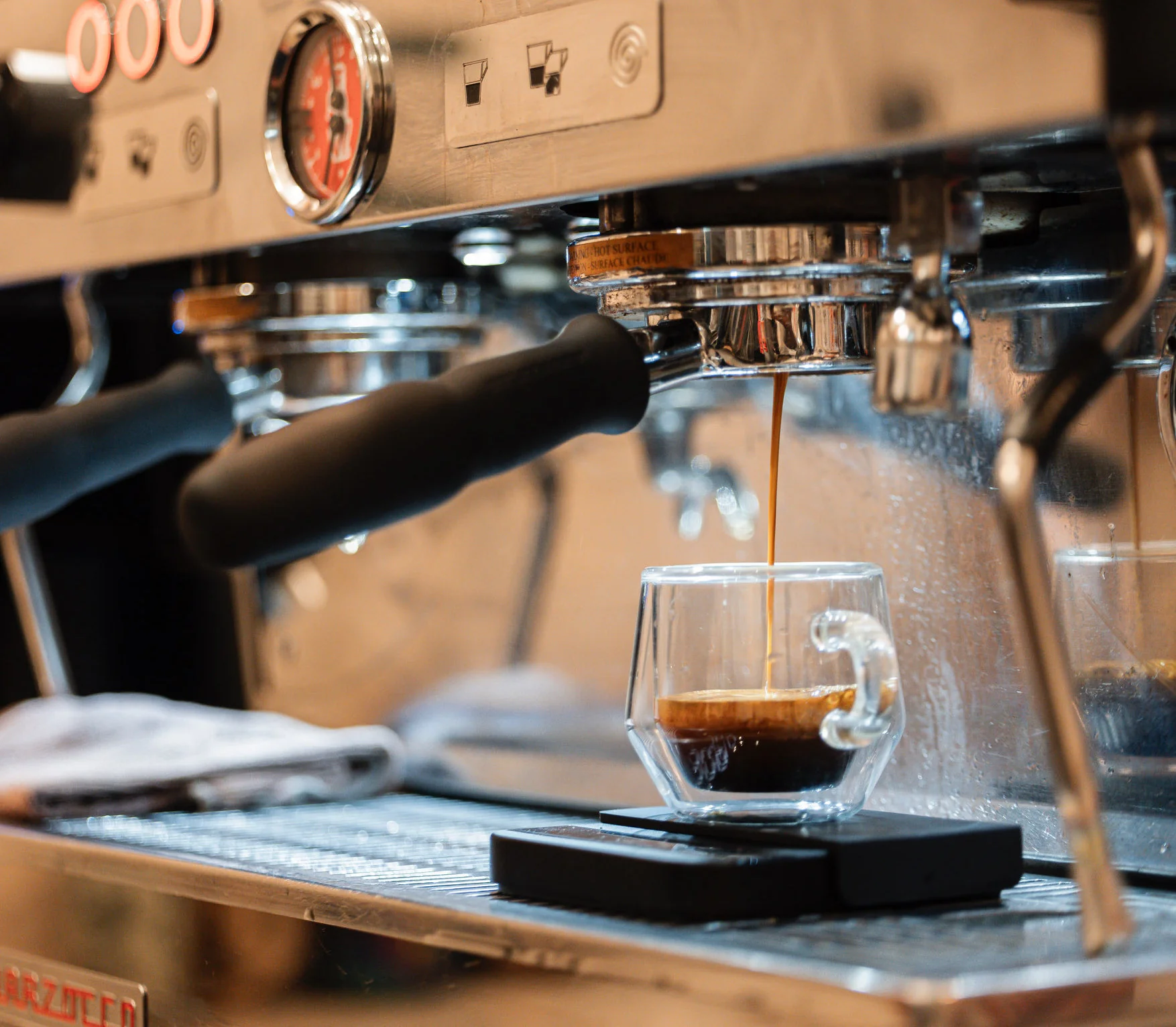
- Pulling the Shot: Lock the portafilter into the group head. Place your pre-warmed cup beneath. Start the extraction. You should see a slow, steady stream of rich, dark liquid with a tiger-stripe crema emerging after a few seconds. Aim for a shot time of 25-30 seconds to yield approximately 1.5 to 2 ounces (45-60 ml) for a double shot.
- Steaming Milk: If making milk-based drinks, purge your steam wand briefly. Submerge the tip just below the surface of cold milk in a stainless steel pitcher. Open the steam valve fully. Aim to incorporate air for 5-10 seconds (the “stretching” phase), then submerge the wand deeper to create a vortex (the “texturing” phase) until the pitcher is warm to the touch (around 140-150°F or 60-65°C). The goal is silky, glossy microfoam.
- Crafting Your Favorite Drinks: Immediately pour your frothed milk into your freshly pulled espresso. Swirl gently to combine for a latte, or spoon a cap of foam on top for a cappuccino.
The Art of the Perfect Espresso Shot
Achieving that elusive “perfect shot” is where passion meets precision.
What Makes a Perfect Shot?
A perfect espresso shot should exhibit several key characteristics:
- Crema: A reddish-brown, uniform, and dense layer of foam on top, ideally lasting for a minute or two.
- Body: A rich, velvety texture that coats the palate.
- Aroma: A complex fragrance with notes ranging from floral to chocolatey, depending on the bean.
- Taste: Balanced, with sweetness, acidity, and bitterness in harmony, leaving a pleasant aftertaste without harshness.
Troubleshooting Common Issues
- Underextraction: If your shot runs too fast, tastes sour or watery, and has thin crema, your grind is likely too coarse, or your dose is too low.
- Overextraction: If your shot runs too slow (or not at all), tastes bitter or burnt, and has dark, splotchy crema, your grind is too fine, or your dose/tamp is too high/hard.
“Mastering espresso is like learning a dance,” shares Elijah Vance, Head Barista at The Daily Grind. “Every element – grind, dose, tamp, temperature, time – needs to move in harmony. Don’t be afraid to adjust one variable at a time until you find the rhythm that produces your perfect shot from your coffee and espresso machine.”
Nurturing Your Investment: Maintenance and Cleaning for Longevity
A well-maintained coffee and espresso machine is a happy machine, delivering consistent quality for years. Neglecting cleaning can lead to bitter flavors, reduced performance, and costly repairs.
Daily Rituals
After each use, flush the group head to remove loose grounds and wipe down the steam wand with a damp cloth immediately. This prevents milk from drying and hardening, which is a nightmare to clean later.
Weekly Tasks
- Backflushing: Using a blind filter in your portafilter and a cleaning detergent (like Cafiza), backflush your machine to clear out old coffee oils from the group head and three-way valve.
- Cleaning the Portafilter: Remove the basket and scrub both the portafilter and basket thoroughly to remove any caked-on coffee residue.
Monthly Deeper Clean
- Descaling: Depending on your water hardness and usage, descale your machine monthly or every few months using a specialized descaling solution. This removes mineral buildup from the boiler and water paths, crucial for machine health and water temperature consistency.
- Group Head Disassembly: Occasionally, you may need to remove the shower screen and group gasket for a more thorough scrub.
Why proper care extends the life of your coffee and espresso machine? Regular cleaning prevents the buildup of coffee oils, mineral deposits, and milk residue, which can all clog internal components, degrade flavor, and lead to premature wear and tear. It’s a small effort for a significant return on your coffee investment.
Choosing Your Ideal Coffee and Espresso Machine: A Buyer’s Compass
With so many options, how do you pick the right coffee and espresso machine? Consider these factors:
Budget Considerations
Espresso machines range from a few hundred to several thousand dollars. Define what you’re willing to spend, remembering that a good grinder is often as important as the machine itself.
Lifestyle and Usage Frequency
Are you an occasional weekend espresso drinker, or do you need multiple lattes every morning? Your frequency will influence the type of machine that best suits your needs, with super-automatics offering quick convenience for high usage, and semi-automatics appealing to those who savor the ritual.
Space and Aesthetics
Espresso machines come in various sizes and designs. Measure your counter space and consider the machine’s appearance. It’s often a prominent kitchen appliance, so choose one that complements your home.
Features to Look For
- PID Controller: For precise and stable temperature control, crucial for consistent espresso.
- Pre-infusion: Gently saturates the coffee grounds before full pressure, leading to more even extraction.
- Dual Boilers/Heat Exchanger: Allows you to brew espresso and steam milk simultaneously without temperature fluctuations.
Frequently Asked Questions About Coffee and Espresso Machines
What’s the difference between a coffee maker and an espresso machine?
A standard coffee maker uses gravity to drip hot water through coarse grounds, producing a milder, larger volume beverage. An espresso machine forces hot water under high pressure through finely ground coffee, yielding a concentrated, intense shot with a distinctive crema.
How often should I clean my espresso machine?
Daily flushing and wiping, weekly backflushing (for compatible machines), and monthly descaling are generally recommended to maintain optimal performance and taste from your coffee and espresso machine.
Can I use pre-ground coffee in my espresso machine?
While possible, it’s not ideal. Pre-ground coffee loses freshness quickly, and its grind size is often too coarse for optimal espresso extraction, leading to a weaker, less flavorful shot. Freshly ground beans are always best.
What’s the best type of coffee bean for espresso?
Generally, medium to dark roast 100% Arabica beans or Arabica/Robusta blends are preferred for espresso. The choice depends on personal taste, with darker roasts offering richer, chocolatey notes, and lighter roasts providing more complex, fruity, or floral profiles.
Is an expensive espresso machine always better?
Not necessarily. While higher-priced machines often offer more advanced features, better build quality, and greater temperature stability, a skilled barista can still pull excellent shots on a mid-range coffee and espresso machine. The key is understanding how to use and maintain your specific model.
Elevate Your Home Coffee Experience
Embracing the world of the coffee and espresso machine is about more than just making a drink; it’s about a passion for quality, a journey of discovery, and the joy of crafting something truly special. From the historical marvels to today’s sophisticated devices, these machines empower you to be your own barista, transforming ordinary beans into extraordinary moments. So, take the plunge, experiment with different beans and techniques, and savor every rich, aromatic sip. Your home coffee experience is about to be wonderfully elevated.