As someone who’s spent over fifteen years immersed in the intricate world of espresso machines, from the humblest home setups to bustling commercial powerhouses, I can confidently say that few machines strike the perfect balance between professional-grade features and home-friendly design quite like the Breville Dual Boiler Espresso Machine. For the discerning coffee enthusiast in the U.S. ready to elevate their craft, this machine isn’t just an appliance; it’s an investment in countless perfect mornings, a testament to serious coffee passion, and a true workhorse in the home barista’s arsenal.
A Deep Dive into the Breville Dual Boiler’s Legacy
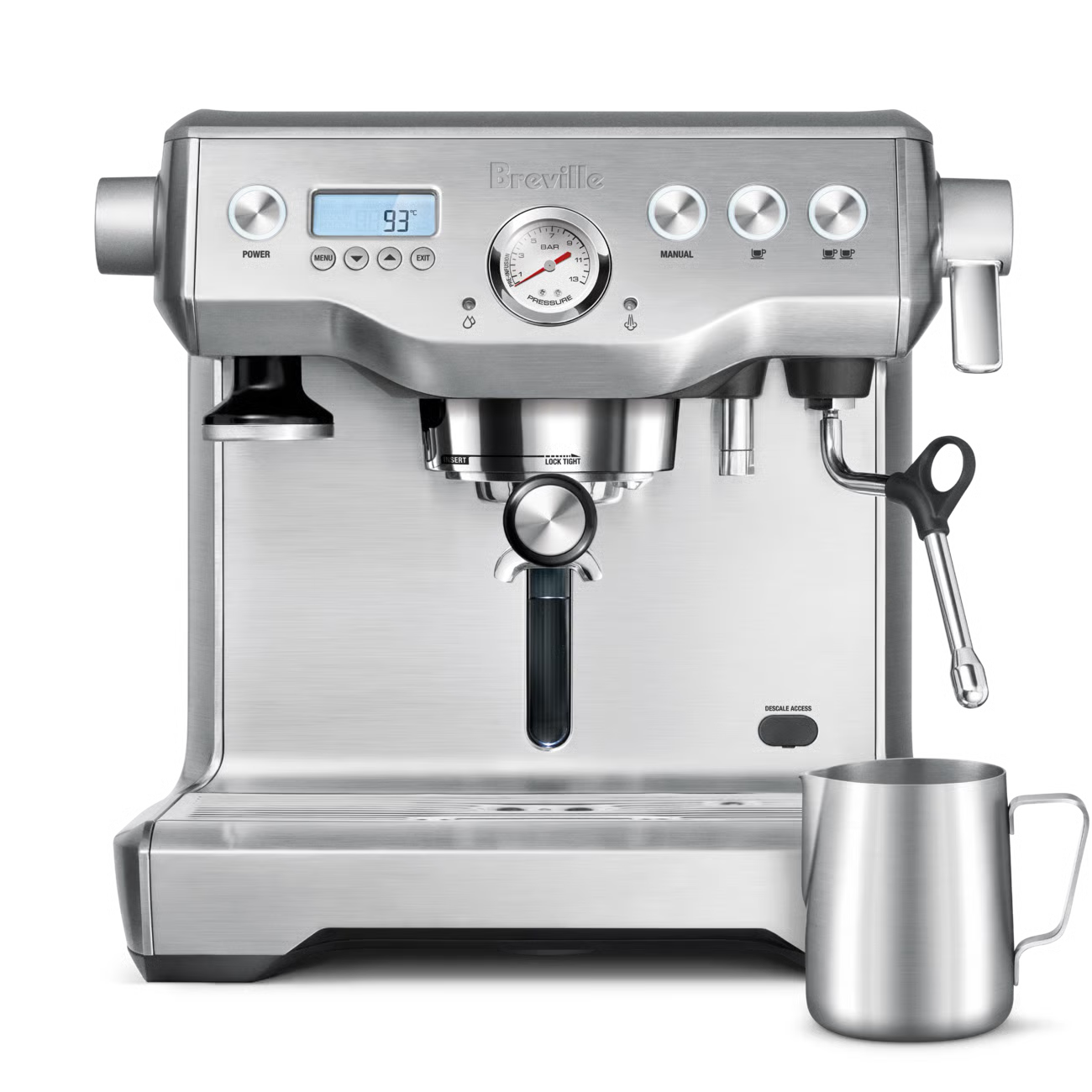
Breville, a brand synonymous with intuitive design and accessible innovation, truly hit a home run with the Dual Boiler. It arrived on the scene as a game-changer, bridging the gap between entry-level single-boiler machines and often intimidating commercial-grade setups. It brought sophisticated features usually reserved for much higher price points into the home kitchen, democratizing the pursuit of espresso perfection.
The Evolution of a Home Barista Icon
Before the Breville Dual Boiler, achieving true temperature stability and simultaneous brewing and steaming at home was a luxury. Many home baristas struggled with temperature surfing or long waits between pulling a shot and steaming milk. The Dual Boiler revolutionized this by introducing independent boilers for espresso extraction and steam production, effectively eliminating these compromises and making a truly professional workflow accessible to the dedicated home user. This advancement wasn’t just about convenience; it was about consistency, which, as any seasoned barista knows, is the holy grail of espresso.
What Makes the Breville Dual Boiler Stand Out?
The brilliance of the Breville Dual Boiler espresso machine lies in its meticulously engineered features, designed to empower you with ultimate control over every aspect of your espresso. It’s built on principles of thermal stability, precise extraction, and powerful steam generation.
Dual Boiler System Explained: The Core of Temperature Stability
At the heart of the Breville Dual Boiler is, well, its dual boiler system. This means it has two separate, dedicated boilers: one for brewing espresso and another for producing steam. Why is this a game-changer? The brew boiler can maintain a precise temperature, typically around 200°F (93°C), optimized for coffee extraction, while the steam boiler can simultaneously heat water to a much higher temperature, around 265°F (130°C), for powerful, dry steam. This independent control ensures that your espresso temperature remains rock-solid stable from the first drop to the last, providing superior flavor clarity and consistency, shot after shot. No more waiting, no more temperature fluctuations – just perfect coffee, every time.
PID Control and Programmable Shots
Precision is paramount in espresso, and the Breville Dual Boiler understands this deeply. It integrates Proportional-Integral-Derivative (PID) temperature control, a sophisticated algorithm that constantly monitors and adjusts water temperature in the brew boiler. This means you can program your desired brew temperature down to the degree, ensuring optimal extraction for different coffee beans and roasts. Furthermore, the machine allows you to program pre-infusion duration and pressure, as well as shot volume, giving you unparalleled control to fine-tune your espresso to perfection. This level of customization allows you to truly explore the nuances of various coffees.
Powerful Steam Wand for Latte Art
For many, the espresso experience isn’t complete without beautifully textured milk. The Breville Dual Boiler features a powerful, commercial-style steam wand that delivers dry, consistent steam. This isn’t just for heating milk; it’s for creating silky microfoam – that velvety texture essential for pouring intricate latte art. The instant, strong steam power means you can perfectly texture your milk right after pulling your shot, maintaining ideal espresso temperature without delay. Mastering this wand is a rewarding journey, transforming your milk-based drinks into café-quality masterpieces.
Thoughtful Design and User Experience
Beyond its technical prowess, the Breville Dual Boiler is lauded for its intelligent design and user-friendly interface. From the clear LCD display that provides vital shot information to the easy-access water tank and convenient descale port, every element is designed with the home barista in mind. The heated group head ensures thermal stability at the point of extraction, and features like the over-pressure valve (OPV) prevent over-extraction, contributing to a balanced and delicious espresso. Even small details, like the magnetic tamper and hidden storage tray for accessories, enhance the overall user experience.
Mastering Your Breville Dual Boiler: A Step-by-Step Guide
Getting the most out of your Breville Dual Boiler espresso machine requires a bit of practice and an understanding of the fundamentals. But with its precise controls, you’ll find the learning curve rewarding.
Dialing In Your Espresso Shot
- Grind Fresh: Always start with freshly roasted, quality beans and a good burr grinder (like the Breville Smart Grinder Pro or a dedicated single-dosing grinder). Grind size is critical for espresso.
- Dose Accurately: Use a digital scale to weigh your coffee grounds (typically 18-20 grams for a double shot). Distribute them evenly in the portafilter basket.
- Tamp Level: Apply even pressure with your tamper to create a flat, dense puck.
- Set Parameters: Adjust your grind size, brew temperature, and pre-infusion settings based on your beans. A good starting point for brew temperature is 200°F (93°C).
- Extract: Lock in the portafilter and start your shot. Aim for approximately 36-40 grams of liquid espresso in 25-30 seconds. Adjust grind size finer if the shot runs too fast, coarser if too slow.
- Taste and Adjust: The most important step! Taste your espresso. Is it too sour (underextracted)? Too bitter (overextracted)? Adjust your grind, dose, and temperature accordingly until you find the sweet spot.
Steaming Milk Like a Pro
- Cold Milk is Key: Start with fresh, cold milk (dairy or alternative). Fill your stainless steel milk pitcher just below the spout.
- Purge the Wand: Briefly open the steam valve to clear any condensation.
- Position the Wand: Submerge the tip just below the surface of the milk, slightly off-center.
- Introduce Air (“Stretching”): Open the steam valve fully. You’ll hear a gentle “tearing paper” sound as air is incorporated. Do this for a few seconds until the milk volume increases by about 20-30%.
- Texturize (“Rolling”): Lower the pitcher so the steam wand tip is fully submerged. The milk should swirl like a vortex, incorporating the air you’ve just added. Continue until the pitcher is too hot to touch.
- Clean and Serve: Turn off the steam, wipe the wand immediately with a damp cloth, and purge again to clear any milk residue. Swirl your textured milk and pour your latte art.
Keeping Your Machine Pristine: Maintenance & Care
To ensure your Breville Dual Boiler espresso machine continues to deliver exceptional performance for years to come, regular maintenance is crucial. Think of it as caring for a high-performance vehicle – a little love goes a long way.
Regular Cleaning Routines
- Daily: Backflush with water after your last shot. Wipe down the steam wand immediately after each use. Empty and rinse the drip tray.
- Weekly: Backflush with a cleaning tablet (like Cafiza) to remove coffee oils from the group head and three-way valve. Clean the shower screen and group gasket with a brush.
- Monthly: Clean the steam wand tip using a pin if any holes are clogged. Consider a deeper clean of the drip tray and surrounding areas.
Descaling for Longevity
Over time, mineral deposits from water can build up in the boilers and lines, affecting performance and potentially damaging your machine. The Breville Dual Boiler has a built-in descale program, which makes the process straightforward. Use a quality descaling solution recommended by Breville or a suitable alternative. The machine will prompt you when it’s time to descale, typically every 2-3 months depending on your water hardness. Using filtered water can significantly extend the time between descales.
Is the Breville Dual Boiler the Right Machine for You?
Choosing an espresso machine is a personal journey, but the Breville Dual Boiler espresso machine is often the answer for a specific type of coffee lover.
Who Benefits Most?
The Breville Dual Boiler is ideal for:
- The Aspiring Home Barista: If you’re passionate about making café-quality espresso at home and are willing to invest time in learning and refining your technique.
- The Entertainer: If you frequently host guests and need to make multiple milk-based drinks quickly and efficiently.
- The Coffee Connoisseur: If you value precise temperature control, consistent extraction, and the ability to experiment with different beans and roast profiles.
- The Practical Enthusiast: If you want commercial-grade performance without the commercial footprint or daunting price tag.
Pairing with the Perfect Grinder
An espresso machine is only as good as its grinder. For the Breville Dual Boiler, investing in a high-quality, espresso-specific burr grinder is non-negotiable. Look for grinders that offer stepless or micro-step adjustments to dial in your grind precisely. Popular pairings include the Breville Smart Grinder Pro for convenience, or dedicated grinders like the Baratza Sette series, Eureka Mignon series, or even higher-end options for ultimate precision. A great grinder unlocks the full potential of your Dual Boiler.
Expert Insights & FAQs
As a seasoned veteran in the espresso world, I often encounter similar questions about the Breville Dual Boiler. Here are some answers based on years of hands-on experience and feedback from countless home baristas.
Q: What is the optimal brew temperature for most espresso shots on the Breville Dual Boiler?
A: While it varies by bean, 200°F (93°C) is an excellent starting point for most medium to dark roasts. Lighter roasts might benefit from a degree or two higher, while darker roasts could be slightly lower.
Q: How often should I backflush my Breville Dual Boiler?
A: I recommend a quick water backflush daily after your last shot and a backflush with a cleaning tablet at least once a week, especially if you pull multiple shots daily.
Q: Can the Breville Dual Boiler be plumbed in?
A: Yes, the Breville Dual Boiler (BES920XL model) typically comes with the option to connect to a water line, which is a fantastic feature for hands-free refilling if your kitchen setup allows. Always consult your manual for proper installation.
Q: What type of water should I use with my Breville Dual Boiler?
A: Using filtered water is highly recommended to minimize scale buildup and improve coffee taste. Avoid distilled water, as it lacks minerals essential for proper extraction.
Q: Is the Breville Dual Boiler suitable for a beginner?
A: While it offers advanced features, the Breville Dual Boiler is surprisingly approachable for motivated beginners. Its intuitive controls and clear feedback make learning espresso enjoyable and less frustrating than with some other prosumer machines.
Conclusion
The Breville Dual Boiler espresso machine stands as a testament to what’s possible in the home espresso landscape. It’s a robust, feature-rich machine that offers unparalleled control, thermal stability, and powerful steam, allowing you to craft truly exceptional espresso and milk-based drinks right in your kitchen. From its dual independent boilers to its precise PID temperature control, every aspect is designed to empower the home barista. Investing in this machine means committing to a journey of coffee discovery, where consistency and quality become the norm. So, dial in your grind, master your technique, and enjoy the rich, nuanced world of espresso that your Breville Dual Boiler unlocks. The pursuit of the perfect cup has never been more accessible or more rewarding.